
Медіа

Fabricated Homes: A Comprehensive Exploration of Design, Construction, and Innovation

Jan 30, 2026

Fabricated homes—also known as factory-built, modular, manufactured, or prefabricated homes—represent a transformative approach to residential construction.

What Are Fabricated Homes?

Fabricated homes are residential buildings that are partially or wholly constructed offsite in a controlled factory environment. Unlike traditional site-built homes, where all construction occurs on the property, fabricated homes move significant portions of the process into factories where materials, labor, and quality control can be standardized.

Fabrication methods include:

  • Modular Construction
  • Manufactured (HUD Code) Homes
  • Panelized Construction
  • Panelized Structural Insulated Panels (SIPs)
  • 3D-Printed Components
  • Shipping Container or Other Modular Blocks

Each method varies in how much of the home is completed before delivery to the site.

Historical Context and Industry Evolution

The concept of prefabrication is not new—shipbuilders, ancient Romans, and early industrialists used precut and panel systems. Modern fabricated homes emerged in the 20th century, especially after World War II, to address housing shortages. The industry has continually evolved with advances in materials science, manufacturing technology, and software design tools.

Core Fabrication Methods Explained

1. Modular Construction

Modular homes are built in large volumetric units (modules) in a factory and transported to the site.

The modules are:

  • Engineered to fit together precisely
  • Built with the same codes and standards as traditional homes
  • Joined onsite to form a complete structure, including utilities

Technical Aspects:

  • Precision Control: GPS, laser leveling, and CNC machinery help ensure dimensional accuracy.
  • Load-Bearing Interfaces: Connection hardware and engineered plates are used to transfer structural loads between modules.
  • Thermal Envelope Continuity: Sealing membranes and insulation continuity are critical at joints between modules.

2. Manufactured (HUD Code) Homes

Manufactured homes are built completely in a factory under the HUD Code (Housing and Urban Development).

They are typically:

  • Transported as complete units
  • Built on a permanent steel chassis
  • Installed on site with foundations, piers, or crawlspaces

Technical Aspects:

  • HUD Code Standards: Structural integrity, fire safety, energy performance
  • Steel Chassis: Provides support during transport and basic structural rigidity
  • Onsite Tie-Downs: Anchors, straps, and piers secure the home against wind and seismic forces

3. Panelized Construction

Walls, floors, and roof panels are fabricated and shipped flat. The home is assembled onsite like pieces of a puzzle.

Panels Types:

  • Standard Stud Framed Panels
  • Insulated Panels
  • Pre-Plumbed or Pre-Wired Panels

Technical Aspects:

  • Connection Systems: Engineered brackets and fasteners
  • Precision Fabrication: Minimizes onsite labor and waste
  • Thermal Efficiency: Integrated insulation and air sealing systems

4. Structural Insulated Panels (SIPs)

SIPs are large sandwich panels with:

  • OSB (Oriented Strand Board) skins
  • Rigid foam core insulation

They offer superior thermal performance and structural strength.

Technical Aspects:

  • R-Value Performance: High insulation reduces heating/cooling loads
  • Air Tightness: Continuous panel surfaces minimize leaks
  • Load Distribution: SIPs can span larger distances than traditional framing

Design and Engineering Considerations

Architectural Planning

Fabricated homes use BIM (Building Information Modeling) or similar design tools to coordinate:

  • Structural systems
  • MEP (Mechanical, Electrical, Plumbing)
  • Finishes and interfaces
  • Transport constraints (module width/height limits)

Structural Engineering

Engineers must account for:

  • Wind loads
  • Seismic forces
  • Transportation stresses
  • Onsite assembly tolerances

Materials such as structural steel, engineered lumber, and advanced fasteners are selected for performance and repeatability.

Mechanical, Electrical, and Plumbing (MEP) Integration

In a factory environment:

  • MEP systems are pre-routed and tested
  • Modular connections use quick-connect fittings
  • Air pressure and flow are tested for compliance

This reduces onsite rework and improves reliability.

Thermal and Moisture Control

Performance is optimized through:

  • Continuous insulation
  • Air sealing membranes
  • Intelligent vapor retarders
  • Thermal bridging mitigation

These systems improve energy performance and occupant comfort.

Transportation and Onsite Assembly

Fabricated modules or panels are transported on flatbed trucks under strict regulations regarding:

  • Size limits
  • Permits
  • Escort vehicles for oversized loads

Onsite assembly includes:

  • Placing modules on foundations
  • Joining and sealing
  • Connecting utilities
  • Final inspections

Precision during transport and placement is critical to maintain structural integrity and alignment.

Advantages of Fabricated Homes

Speed of Construction

Factory production runs parallel to site preparation, compressing timelines significantly.

Quality Control

Controlled environments minimize weather delays and variability. Quality assurance protocols ensure consistency.

Cost Efficiency

Economies of scale, reduced waste, and efficient labor result in lower costs compared with conventional construction.

Sustainability

Reduced waste, better insulation, and optimized use of resources contribute to lower environmental impact.

Design Flexibility

Modular systems can be adapted to various architectural styles and performance goals.

Challenges and Limitations

Transportation Constraints

Oversized modules are limited by transportation laws and require careful planning.

Financing and Perception

Some lenders and consumers still view fabricated homes with traditional biases, affecting financing and resale value.

Site Conditions

Complex terrain, access challenges, or remote sites may complicate delivery and installation.

Regulatory Variability

Codes and permitting processes differ by jurisdiction, requiring specialized expertise.

Future Trends

Advanced Materials

Lightweight composites, high-strength engineered lumber, and smarter insulation materials will continue to improve performance.

Automation and Robotics

Greater automation in manufacturing will enhance precision and reduce labor costs.

Digital Twins and AI

Digital twins, simulation, and AI optimization will enable predictive quality control and performance modeling.

Net Zero and Resilience

Fabricated homes will increasingly target net-zero energy, resilience to climate extremes, and smart home integration.

Fabricated homes represent a mature yet evolving segment of residential construction, blending engineering precision with architectural flexibility. From modular units to advanced SIP systems, the technical innovations underpinning factory-built homes offer compelling advantages in speed, quality, sustainability, and cost. As technologies and perceptions continue to advance, fabricated homes are poised to play a central role in addressing global housing challenges in the 21st century.
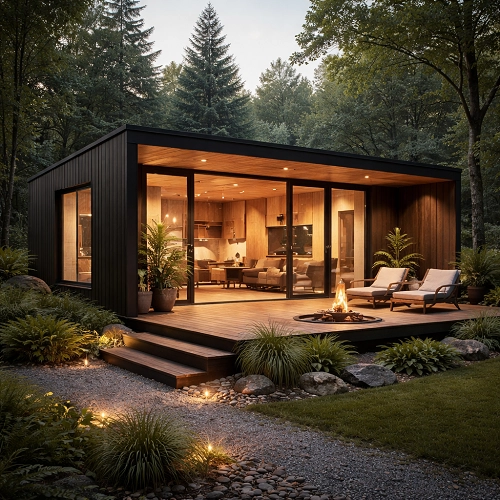

Fabricated Homes